
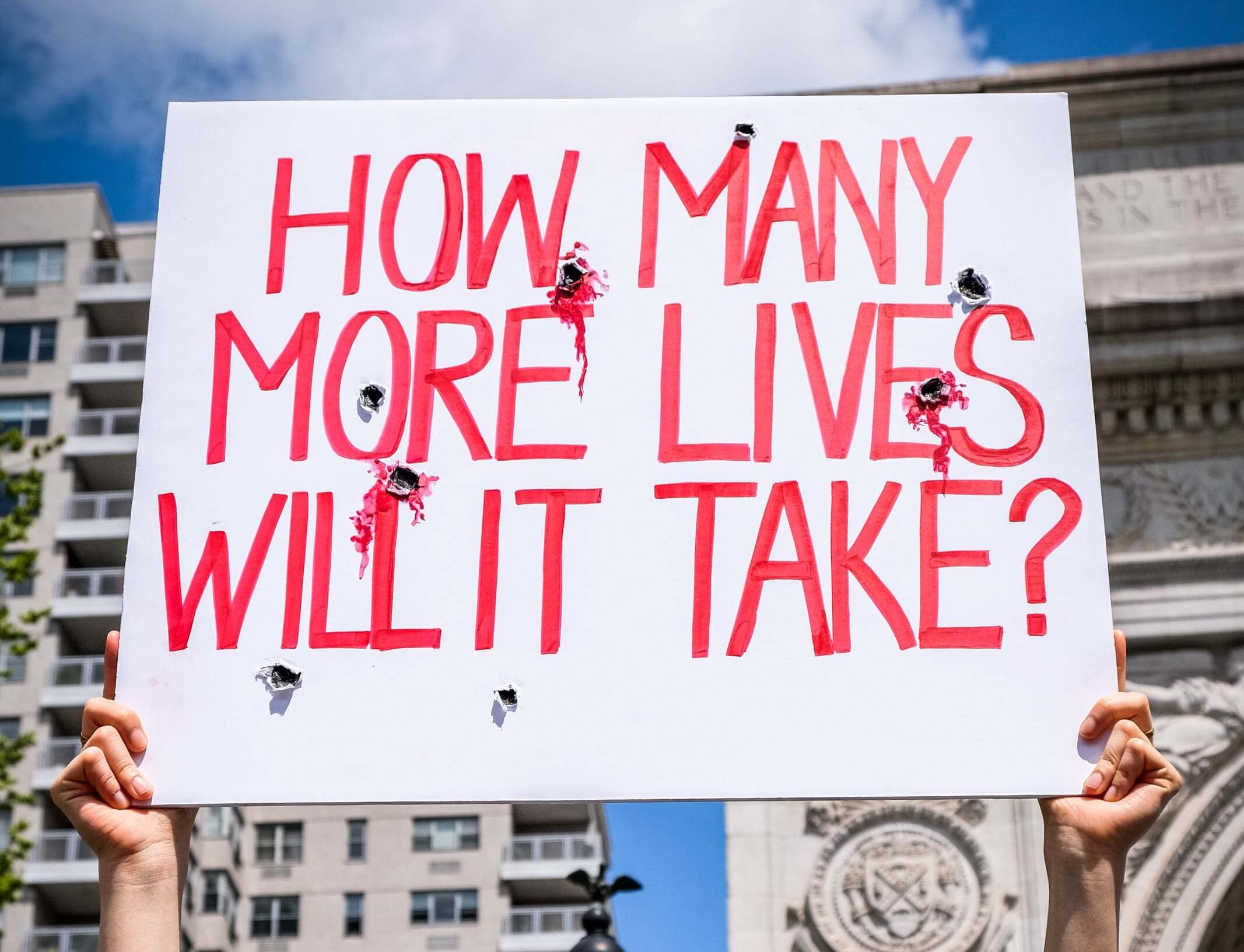
Why does the USA have an obsession with guns despite multiple shootings that affect their own children every day?
This is a complex and controversial question that does not have a simple answer. However, some possible factors that contribute to the gun culture in the United States are:
- The Second Amendment to the United States Constitution protects gun ownership: “A well-regulated Militia, being necessary to the security of a free State, the right of the people to keep and bear Arms, shall not be infringed.”
- The historical and cultural roots of gun ownership in the United States date back to the American Revolutionary War, the frontier expansion, and the militia tradition. Many Americans saw Guns as symbols of freedom, independence, and self-reliance.
- The personal and practical reasons for owning a gun include self-defense, hunting, sport shooting, or collecting. According to a Pew Research Center survey, about three-quarters of gun owners say that protection is a primary reason they own a gun.
- The political and ideological divide over gun rights and gun control in the United States is often influenced by partisanship, geography, race, and gender. Republicans and rural residents tend to be more supportive of gun rights. In contrast, Democrats and urban dwellers tend to favor more gun control measures2.
These are some of the possible explanations for the gun culture in the United States. However, they still need to be completed or definitive. Different people may have different views and experiences with guns, and there may be other factors that influence their attitudes and behaviors. Some people may also question or challenge the assumptions and implications of the term “obsession” when describing the gun culture in the United States.
How does the U.S. compare to other countries in terms of gun ownership and violence?
U.S. has the highest rate of gun ownership and gun violence among the world’s most developed countries. The U.S. also has the loosest gun laws and the strongest gun rights lobby compared to other wealthy democracies. Some of the countries that have enacted stricter gun control measures after experiencing mass shootings are Australia, Canada, and the United Kingdom. These countries have seen a decline in gun-related deaths and crimes since then. However, the U.S. has not followed their example despite having more frequent and deadly mass shootings. The reasons for this are complex and controversial.
Is there a way to avoid school shootings despite gun ownership?
School shootings are tragic events that have devastating impacts on the victims, their families, and their communities. There is no single or simple solution to prevent them, but there are some possible ways to reduce the risk and mitigate the harm. Some of the suggested ways are:
- Teach social and emotional skills to students, such as empathy, communication, conflict resolution, and coping strategies. These skills can help students develop positive relationships, manage emotions, and resolve problems peacefully.
- Hire more counselors and school resource officers to provide mental health support, threat assessment, and crisis intervention to students in need. These professionals can also foster a safe and supportive school climate and culture.
- Use technology to identify troubled students and report potential threats anonymously. Technology can also enhance communication and coordination among school staff, parents, law enforcement, and emergency responders in case of a crisis.
- Implement effective safety measures that balance security and accessibility, such as access control, metal detectors, surveillance cameras, and emergency plans. These measures can deter or detect unauthorized intruders, weapons, or explosives and facilitate a rapid and orderly response to an emergency.
- Enact stricter gun laws that regulate the sale, possession, and storage of firearms, especially for minors, felons, and mentally ill individuals. These laws can prevent or limit access to guns by those who are most likely to misuse them or pose a danger to themselves or others.
There are ways to prevent school shootings, but they are not exhaustive or guaranteed. They require the collaboration and commitment of various stakeholders, such as educators, parents, students, policymakers, and law enforcement. They must also be tailored to each school and community’s context and needs. Ultimately, preventing school shootings is a complex and multifaceted challenge that requires a comprehensive and holistic approach.
The STOP School Violence Act is a federal law passed in 2018 to provide grants to schools for implementing security measures and preventing violence. The acronym STOP stands for Student, Teachers, and Officers Preventing School Violence2. The law authorizes the Department of Justice to award grants to states, local governments, tribes, and public agencies for the following purposes:
- Training school personnel and students on how to recognize and respond to signs of violence.
- Developing and operating technology solutions, such as anonymous reporting systems, for threats of school violence
- Developing and operating school threat assessment and intervention teams
- Providing specialized training for school officials on how to handle mental health crises.
- Supporting any other measure that may improve school safety.
The law also requires that the funded programs and technologies are based on evidence of effectiveness and comply with applicable standards and codes. The law aims to improve school security by giving students and teachers the tools to prevent and stop acts of violence before they happen.
How do parent’s gun ownership, gun storage at home, and school shootings link to each other?
Some of the possible links between parents’ gun ownership, gun security at home, and school shootings are:
- Access to guns: Studies have shown that most guns used in youth suicides, school shootings committed by youth, and accidental firearm injuries among youth were obtained from home or from the homes of friends or relatives1. Guns came from the house of a parent or close relative in 76% of school attacks where firearms were used, according to a 2019 assessment by the U.S. Department of Homeland Security.
- Liability for guns: Some states have enacted child access prevention (CAP) laws, which hold adults (usually parents) legally responsible if a child gains unsupervised access to a firearm1. However, these laws vary in definitions, triggers, and penalties and are rarely enforced or prosecuted. In a recent case, the parents of a school shooter in Michigan were charged with involuntary manslaughter for their alleged negligence and complicity in their son’s actions.
- Prevention of violence: Parents can play a role in preventing school shootings by teaching their children social and emotional skills, providing mental health support, using technology to identify and report threats, implementing adequate safety measures, and enacting stricter gun laws. These actions can help reduce the risk and mitigate the harm of gun violence among youth.
What contributes to the young children bringing guns to school?
Many possible factors could contribute to young children bringing guns to school, such as:
- Lack of safe storage laws: According to a study by Brady, 82% of students who bring guns to school live in states without safe storage laws1. Safe storage laws require gun owners to store their firearms securely and prevent unauthorized access, especially by children.
- Exposure to violence: Children who have experienced or witnessed violence, such as domestic abuse, bullying, or community violence, may be more likely to carry guns for protection or retaliation. They may also suffer from trauma, mental health issues, or behavioral problems that affect their impulse control and decision-making.
- Access to firearms: Children may obtain guns from their own homes, relatives, friends, or illegal sources. Some children may steal guns from family members or other places, while others may receive guns as gifts or buy them online or on the street. The availability and accessibility of firearms may increase the likelihood of children bringing guns to school.
- Peer pressure and social norms: Children may be influenced by their peers, role models, or media to carry guns to school. They may want to have a tough guy, a criminal-type image, or earn respect from others.
A tough guy image is often associated with guns and killing because of the influence of media, culture, and gender norms. Some possible reasons are:
- Media portrayals of masculinity often emphasize violence, aggression, and power as the defining traits of being a man. These images can shape how boys and men view themselves and others and create unrealistic expectations of manhood.
- Culture and society may reinforce the idea that men have to be tough, dominant, and assertive and that violence is a legitimate way to solve problems or express emotions. These messages can pressure boys and men to conform to a narrow and rigid version of masculinity and discourage them from showing vulnerability or seeking help.
- Gender norms and stereotypes may create a binary opposition between masculinity and femininity and associate the former with strength, rationality, and action and the latter with weakness, emotionality, and passivity. These norms can lead boys and men to reject anything that is seen as feminine or soft and to prove their masculinity through violent or risky behaviors.
These are some of the possible factors that could contribute to the association between a tough guy’s image and guns and killing. However, this does not mean that all boys and men who carry guns or kill are trying to be tough or that all tough guys are violent. Many other influences and individual differences affect people’s choices and actions. Moreover, there are also many ways to challenge and change these harmful stereotypes and norms and to promote a more diverse and healthy understanding of masculinity.
Is there really a “good guy with a gun”?
This is a complex and controversial question that has been debated by many people, especially in the context of mass shootings in the United States. There is no definitive answer, but some research has suggested that the idea of a “good guy with a gun” stopping a “bad guy with a gun” is not supported by evidence. For example, a study by Stanford Law School found that allowing citizens to carry concealed handguns increased violent crime by 13 to 15 percent by the 10th year of the laws being enacted in the state. Another study by Psychology Today argued that the presence of a gun could turn a would-be-good guy into an intentionally or unintentionally lousy guy. These studies and others have challenged the claim made by the National Rifle Association and some politicians that more armed guards or teachers could prevent or reduce the carnage of mass shootings. However, some people may disagree with these findings or point to other factors that influence gun violence, such as mental health, social issues, or cultural norms. Therefore, it is essential to consider multiple perspectives and sources of information when forming an opinion on this topic.
How can we encourage more accurate depictions of guns in media?
This is a good question that has no easy answer. Some challenges and barriers prevent the media from portraying guns and gun violence more realistically and responsibly. Some of them are:
- Audience preferences and expectations: Many viewers may prefer to watch entertainment that features guns and violence, as they may find it thrilling, exciting, or cathartic. They may also have certain expectations about how guns and violence are depicted based on their previous exposure to media or their own experiences. Changing these preferences and expectations may require a long-term and collaborative effort from the media industry, the public, and other stakeholders.
- Creative freedom and artistic expression: Many content creators may resist any external pressure or guidelines that limit their creative freedom and artistic expression. They may argue that they have the right to tell the stories they want and are not responsible for the social impact of their work. They may also need to be aware that following any rules or standards may compromise the quality or authenticity of their work.
- Economic incentives and constraints: Many media outlets and producers may prioritize profit over social responsibility and may cater to the demands of advertisers, sponsors, or investors. They may also face budgetary or logistical constraints that limit their ability to research, consult, or verify the accuracy of their depictions of guns and violence. They may also worry that changing their approach may alienate or lose their existing or potential audiences.
Despite these challenges and barriers, there are also some ways that we can encourage more accurate depictions of guns in media. Some of them are:
- Educate and inform the media industry and the public: We can provide the media industry and the public with reliable and accessible information and resources about guns and gun violence, such as facts, data, research, guidelines, best practices, and examples. We can also raise awareness and spark dialogue about the effects and implications of media depictions of guns and violence and the benefits and opportunities of more accurate and responsible portrayals.
- Recognize and reward the media industry and the public: We can recognize and reward the media industry and the public for their efforts and achievements in improving the accuracy and responsibility of their depictions of guns and violence. We can also provide incentives and support for them to continue or expand their work, such as funding, training, mentoring, networking, or publicity.
- Engage and collaborate with the media industry and the public: We can engage and collaborate with the media industry and the public in various ways, such as consulting, advising, partnering, or co-creating. We can also invite and involve diverse and representative voices and perspectives from different backgrounds, experiences, and interests, such as gun owners, survivors, experts, advocates, or critics.
How can we change the culture around guns and violence?
There is no easy or quick solution to change the culture around guns and violence. Still, we can take some possible steps as individuals and as a society. Some of them are:
- Educate ourselves and others about the causes and consequences of gun violence and the ways to prevent it. We can learn from the research, data, and stories of survivors and advocates who are working to end gun violence in different contexts and communities.
- Challenge the stereotypes and norms that associate guns with masculinity, power, and protection and that promote violence as a way to solve problems or express emotions. We can question the media, entertainment, and social influences that glorify guns and violence and seek out alternative narratives and role models that celebrate nonviolence, empathy, and diversity.
- Support the policies and practices that reduce firearm access to people who are at risk of harming themselves or others and that hold the gun industry accountable for the marketing and sales of guns and ammunition. We can advocate for better gun control laws, engage with responsible gun dealers and owners, and insist on mandatory training and licensing for owners.
- Build a culture of peace and justice that addresses the root causes of gun violence, such as racial and economic inequality, social exclusion, and lack of opportunities. We can work together to create safe and supportive environments for ourselves and others and foster collective responsibility and efficacy among our communities.
All of the possible ways require our commitment, collaboration, and courage. We can start by having honest and respectful conversations with each other and by listening to the voices and experiences of those who are most affected by gun violence. We can also join or support the movements and organizations that are working to end gun violence in various ways. Together, we can make a difference.



Leave a Reply